

Conventions
Chinese Dynasties and Periods
Map of China
Introduction
1. The Palace Workshops: The Emperor and His Servants
2. Yellow Hill Villages: The Stonecutters
3. Suzhou: The Crafts(wo)man
4. Beyond Suzhou: Gu Erniang the Super-Brand
5. Fuzhou: The Collectors
Epilogue: The Craft of Wen
Appendix 1: Inkstones Made by Gu Erniang Mentioned in Textual Sources Contemporary to Gu
Appendix 2: Inkstones Bearing Signature Marks of Gu Erniang in Major Museum Collections
Appendix 3: Members of the Fuzhou Circle
Appendix 4: Textual History of Lin Fuyun's Inkstone Chronicle (Yanshi)
Appendix 5: Chinese Texts
Notes
Glossary of Chinese Characters
References
Index
· · · · · · (收起)
具體描述
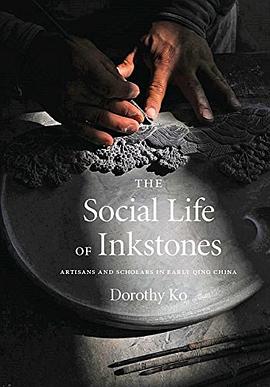
An inkstone, a piece of polished stone no bigger than an outstretched hand, is an instrument for grinding ink, a collectible object of art, a token of exchange between friends or sovereign states, and an inscriptional surface on which texts and images are carved and reproduced. As such the inkstone is entangled with the production of elite masculinity and the culture of wen (culture, literature, civility) in China, Korea, and Japan for over a millennium. Curiously, this ubiquitous object in East Asia is virtually unknown in Europe and America.
The Social Life of Inkstones introduces its hidden history and cultural significance to scholars and collectors and in so doing, writes the stonecutters and artisans into history. Each of the five chapters is set in a specific place in disparate parts of the empire: the imperial workshops in the Forbidden City, the Duan quarries in Guangdong, inkstonecarving workshops in Suzhou and elsewhere in the south, and collectors’ homes in Fujian. Taken together, they trace the trajectories of the inkstone between court and society, and through the course of its entire social life. In bringing to life the people involved in making, using, collecting, and writing about the inkstone, this study shows the powerful emotional and technical investments that such a small object engendered.
This first book-length study of inkstones focuses on a group of inkstone carvers and collectors, highlighting the work of Gu Erniang, a woman transitioned the artistry of inkstone-making to modernity between the 1680s and 1730s. The sophistication of these artisans and the craft practice of the scholars associated with them announced a new social order in which the age-old hierarchy of head over hand no longer predominated.
用戶評價
##一些撕標簽的過程,梳理社會肌理。
評分中文譯本埋頭苦幹中,並將由原作者高彥頤親自操刀修訂,敬請期待!
評分##完整讀一遍還是有很大收獲的,材料組織能力非常值得學習。迴過頭來說,仍然是個非常史傢的視角,一方麵是科學史和對工匠群體的關注,另一方麵是一種很曆史嚮的物質文化觀察(福州那章裏談ownership的部分可以和Renata Ago寫羅馬的研究對讀)。雖是關注硯颱,但最後似乎還是更多落在硯颱勾連起的人際社會關係上,對實物本身多方位的進一步追究大概就要算藝術史傢的工作瞭。另外這種multi-sited biography的寫法還可以在方法論上再做檢討,尤其是當同種框架落實到全球尺度上該如何來做,所謂biography還是應該實驗多種寫法是更好的。
評分##某大佬評價此書unfinished哈哈哈
評分##完整讀一遍還是有很大收獲的,材料組織能力非常值得學習。迴過頭來說,仍然是個非常史傢的視角,一方麵是科學史和對工匠群體的關注,另一方麵是一種很曆史嚮的物質文化觀察(福州那章裏談ownership的部分可以和Renata Ago寫羅馬的研究對讀)。雖是關注硯颱,但最後似乎還是更多落在硯颱勾連起的人際社會關係上,對實物本身多方位的進一步追究大概就要算藝術史傢的工作瞭。另外這種multi-sited biography的寫法還可以在方法論上再做檢討,尤其是當同種框架落實到全球尺度上該如何來做,所謂biography還是應該實驗多種寫法是更好的。
評分##某大佬評價此書unfinished哈哈哈
評分##資料有意思,但是沒能很好組織起來,最後也沒有什麼結論。
評分##希望快齣中文版
評分##希望快齣中文版
相關圖書






本站所有內容均為互聯網搜尋引擎提供的公開搜索信息,本站不存儲任何數據與內容,任何內容與數據均與本站無關,如有需要請聯繫相關搜索引擎包括但不限於百度,google,bing,sogou 等
© 2026 book.coffeedeals.club All Rights Reserved. 靜流書站 版權所有