

具体描述
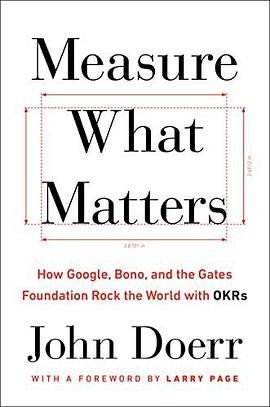
In the fall of 1999, John Doerr met with the founders of a start-up he’d just given $11.8 million, the biggest investment of his career. Larry Page and Sergey Brin had amazing technology, entrepreneurial energy, and sky-high ambitions, but no real business plan. For Google to change the world (or even to survive), Page and Brin had to learn how to make tough choices on priorities while keeping their team on track. They’d have to know when to pull the plug on losing propositions, to fail fast. And they needed timely, relevant data to track their progress—to measure what mattered.
Doerr taught them about a proven approach to operating excellence: Objectives and Key Results. He had first discovered OKRs in the 1970s as an engineer at Intel, where Andy Grove (“the greatest manager of his or any era”) drove the best-run company Doerr had ever seen. Later, as a venture capitalist, Doerr shared Grove’s brainchild with more than fifty companies. Wherever the process was faithfully practiced, it worked.
The rest is history. With OKRs as its management foundation, Google has grown from forty employees to more than 70,000—with a market cap exceeding $600 billion.
In the OKR model, objectives define what we seek to achieve; key results are how those top-priority goals will be attained with specific, measurable actions within a set time frame. Everyone’s goals, from entry-level to CEO, are transparent to the entire organization. The benefits are profound. OKRs surface an organization’s most important work. They focus effort and foster coordination. They keep employees on track. They link objectives across silos to unify and strengthen the entire company. Along the way, OKRs enhance workplace satisfaction and boost retention.
In Measure What Matters, Doerr and coauthor Kris Duggan share a broad range of first-person, behind-the-scenes case studies, with narrators including Bono and Bill Gates, to demonstrate the focus, agility, and explosive growth that OKRs have spurred at so many great organizations. This book will help a new generation of leaders capture the same magic.
用户评价
##五页纸就够了吧 写这么长
评分##给自己定下每天看一章的key result之后终于把这本书看完了,离CDO送我这本书已经过去了一年多了。挺有启发的,让我看到了自己工作中存在的问题潜在的解决方法,但是由于实行OKR需要整个组织的文化变革,蚍蜉难撼大树,所以也只是能默默希望有变革的那一天。这个框架的确是增加组织transparency和consistency的好方法。
评分##先说结论:OKR结合CFR这套管理办法是有用的。但是!不够适合中国本土化。 美国人真的很会讲故事,一本书看下来,那么一套道理,翻来覆去举例子,有点早期安利培训的感觉哈哈哈哈哈
评分##Learned a lot from this book.
评分##五页纸就够了吧 写这么长
评分##画饼的课后作业。刚看完觉得被说服了OKR棒棒,但是让我去实施也是有点烦恼。
评分##其实前几章就够了
评分##从没有见过灌水这么多的书,前面大篇幅赘述OKR多么多么好,越看越emo,深感浪费时间……结果翻到结尾resource,哦嚯,原来重点在这,当成工具书看的话,看resource就够了……前面都是洗脑内容,还不怎么成功….要是把resource内容放开头就好了(一个程序员的perspective
评分##OKR这个方法本身没问题 在用的过程中 对OKR的评估标准不够全面 不够量化 才是正确应用这个方法最大的问题 = =
相关图书







本站所有内容均为互联网搜索引擎提供的公开搜索信息,本站不存储任何数据与内容,任何内容与数据均与本站无关,如有需要请联系相关搜索引擎包括但不限于百度,google,bing,sogou 等
© 2026 book.coffeedeals.club All Rights Reserved. 静流书站 版权所有