

具體描述
編輯推薦
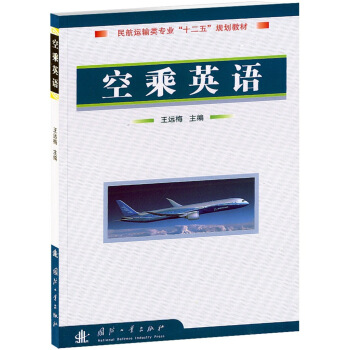
《民航運輸類專業“十二五”規劃教材:空乘英語》基本以實際客艙服務的程序為順序,共分20個單元。每個單元包含四個部分(Dialogues,Announcements,Phonetics,Reading),並且每一部分都配有針對性的練習,以提高學生的機上英語口頭交際能力、廣播能力,擴大其專業知識麵。本教材旨在全麵加強學生機上服務英語基本技能訓練,培養學生實際運用英語的能力,使之在英語會話方麵具備空中乘務工作所需要的基本能力。
內容簡介
《民航運輸類專業“十二五”規劃教材:空乘英語》根據《高職高專教育英語課程教學基本要求》和空中乘務員實際工作需求而設計和編寫,旨在通過真實的行業背景、身臨其境的職業場景、原汁原味的客艙用語、實用豐富的民航知識和有針對性的練習來提高學生英語交際能力和客艙服務水平,實用性強。《民航運輸類專業“十二五”規劃教材:空乘英語》共20個單元,每單元由四部分組成。其中,每單元的PartOne(對話)和PartTwo(廣播詞)為本書的重點,應在課堂上重點講解並讓學生充分練習,以達到學以緻用的目的;PartThree(語音)應在教師的指導下在課堂上完成;PartFour(閱讀)的內容可以作為泛讀材料,要求學生在課前預習,上課時教師進行檢查,並根據學生掌握的情況進行適當的講解。
《民航運輸類專業“十二五”規劃教材:空乘英語》可作為職業院校空中乘務、航空服務等專業的教材,也可作為航空公司新引進空中乘務員的英語培訓教材,或空中乘務員復訓時英語書麵及口語測試的參考材料。
目錄
Unit OnePart One Dialogues: Passenger Reception
Part Two Announcements: Welcome and Recheck of Boarding Pass
Part Three Phonetics: American and British Phonetic Symbols in Contrast
Part Four Reading
Unit Two
Part One Dialogues: Arranging Seats
Part Two Announcements: Pre-take off Safety Check
Part Three Phonetics: The Vowels and Consonants
Part Four Reading
Unit Three
Part One Dialogues: Arranging Baggage
Part Two Announcements: Baggage Check
Part Three Phonetics: The Pure Vowels
Part Four Reading
Unit Four
Part One Dialogues: Delay
Part Two Announcements: Welcome after a Delayed Departure
Part Three Phonetics: The Diphthongs
Part Four Reading
Unit Five
Part One Dialogues: Safety Check Before Take-off
Part Two Announcements: Safety Demonstration
Part Three Phonetics: The Explosive and Fricative Consonants
Part Four Reading
Unit Six
Part One Dialogues: After Takeoff
Part Two Announcements: Introduction of Flight Routes and Service Items
Part Three Phonetics: The Affricate, Nasal, Lateral Consonants and the Semi-vowels
Part Four Reading
Unit Seven
Part One Dialogues: Drink Service
Part Two Announcements: Drink and Meal Services
Part Three Phonetics: Syllables and Word Stress
Part Four Reading
Unit Eight
Part One Dialogues: Food Service (I)
Part Two Announcements: Before Landing
Part Three Phonetics: Open Syllables and Closed Syllables
Part Four Reading
Unit Nine
Part One Dialogues: Food Service (If)
Part Two Announcements: Flying at Night and Stopover
Part Three Phonetics: Reading Rules of English Vowel Letters in Stressed Syllables
Part Four Reading
Unit Ten
Part One Dialogues: Abnormal Situations in Service
Part Two Announcements: Apologies for Abnormal Service
Part Three Phonetics: Reading Rules of English Vowel Letters in Unstressed Syllables
Part Four Reading
Unit Eleven
Part One Dialogues: Duty Free Sales
Part Two Announcements: Movies/Duty-free Sales
Part Three Phonetics: Reading Rules of Double Syllables
Part Four Reading
Unit Twelve
Part One Dialogues: In-flight Entertainment
Part Two Announcements: Holidays and Festivals
Part Three Phonetics: Reading Rules of Multi-syllables
Part Four Reading
Unit Thirteen
Part One Dialogues: Jet Lag
Part Two Announcements: Quarantines
Part Three Phonetics: Loss of Plosion and Incomplete Plosion
Part Four Reading
Unit Fourteen
Part One Dialogues: Airsickness
Part Two Announcements: Landing
Part Three Phonetics: Consonants Clusters and Sound Linking
Part Four Reading
Unit Fifteen
Part One Dialogues: Sick Passengers
Part Two Announcements: Cancellation and Staying Overnight
Part Three Phonetics: Reading Rules of Noun+s/es and Verb+ed
Part Four Reading
Unit Sixteen
Part One Dialogues: Helping Passenger Find Lost Articles
Part Two Announcements: Waiting for Clearances
Part Three Phonetics: Sentence Stress
Part Four Reading
Unit Seventeen
Part One Dialogues: Transit Passengers
Part Two Announcements: Landing in Transit
Part Three Phonetics: Thought Patterns and Pausing
Part Four Reading
Unit Eighteen
Part One Dialogues: Filling Out Forms
Part Two Announcements: Unexpected Situations
Part Three Phonetics: Intonation
Part Four Reading
Unit Nineteen
Part One Dialogues: Emergency Procedures
Part Two Announcements: Emergency Procedures
Part Three Phonetics: Use of the Falling Tone
Part Four Reading
Unit Twenty
Part One Dialogues: Pre-arrival and After Arrival
Part Two Announcements: Brace for Impact
Part Three Phonetics: Use of the Rising Tone
Part Four Reading
Words and Phrases
References
精彩書摘
Flight crew is a group of people employed by an airline who have duties on board the aircraft. It consists of two kinds of people: those who are responsible for the safety, efficient operation of an aircraft and those who are responsible for the safety and wellbe- ing of passengers on a flight. The first kind is called pilots and the other, cabin crew.
Pilots exercise command over the crew, including the co-pilots (first officers) and cabin crew. Aircraft are usually operated by two, three or four pilots, depending on the type of aircraft and length of journey. The pilot who is called the captain is the more senior one. He has full responsibility for the safety of the aircraft and its occupants.
Pilots are needed in four areas: passenger scheduled services; passenger charter services; freight services; and business aviation (general aviation). The business avia- tion is the biggest sector worldwide and includes private aircraft, flying schools, and companies transporting oil and gas workers to offshore rigs.
Many consider flying to be a dream job but perhaps have an unrealistic idea about what it is really like. In fact, the job demands a great deal of personal commitment and self-sacrifice. A pilot has to pass stringent training courses, and then be tested in recur- rent training twice yearly in order to maintain the relevant license.
Cabin crew is the people who are working with the passengers in the cabin. They attend to passengers needs throughout the flight, serving refreshments and selling du- ty-free goods, so customer service is vital. They are expected to be friendly, enthusias- tic and courteous at all times. Cabin crew can also be divided into two groups: the senior member is called flight director or purser and those who work under the senior member are called cabin attendants.
A qualified cabin crew must be with lofty goals and passion. But thats not enough. High level of professionalism and hard working attitude are a must. Language is also important, and an excellent cabin crew must be able to communicate with passengers in English fluently who are not sharing the same language.
Cabin attendant should carry out a range of duties: attending a pre-flight briefing, and crew members are assigned their tasks for the coming flight.
……
前言/序言
隨著中國航空市場的蓬勃發展,國際航綫的日漸增加,越來越多的航空公司開通瞭中國至世界各地的航班,如何提高機上服務水平成為各航空公司一項迫在眉睫的工作,要提高機上服務水平關鍵在於要有一支高素質的空中乘務人員隊伍,提高空中乘務人員的英語實際應用能力則是提高服務質量的前提。《空乘英語》正是在這種情況下應運而生的。本教材針對高職高專院校空中乘務專業的英語課程,是以培養和提高學生的英語交際能力和機上的應變能力為目標的實用教材。本教材從培養高級應用型人纔的總體目標齣發,結閤學生畢業後的工作實際,力求嚮學生提供其未來工作崗位所需要的專業英語知識技能,培養學生使用涉外業務英語的交際能力。本教材本著“以應用為目的,實用為主,夠用為度”的原則,著重強調實用性、常識性和靈活性,把空中乘務工作中可能用到的英語詞匯、句型、語法和相關知識作為重點內容,盡量避免過於生澀、專業的詞匯,使學生能夠真正學以緻用,為高職高專培養實用型人纔盡綿薄之力。
《空乘英語》基本以實際客艙服務的程序為順序,共分20個單元。每個單元包含四個部分(Dialogues,Announcements,Phonetics,Reading),並且每一部分都配有針對性的練習,以提高學生的機上英語口頭交際能力、廣播能力,擴大其專業知識麵。本教材旨在全麵加強學生機上服務英語基本技能訓練,培養學生實際運用英語的能力,使之在英語會話方麵具備空中乘務工作所需要的基本能力。因此本教材在編寫中力求體現以下幾個特點。
(1)以航空服務業為背景,以客艙服務工作程序為主綫,培養學生正確的學習方法和獨立工作能力。
(2)根據機上服務工作的實際需求,有針對性地培養學生的英語口頭錶達能力,幫助學生掌握語言的交際功能。
(3)在培養英語語言能力過程中,豐富學生在民航領域,尤其是航空商務英語方麵的專業詞匯和實用知識,為學生將來步人社會從事航空服務行業工作,進一步提高英語的交際能力打下基礎。
本書由王遠梅任主編,吳嘯驊、唐菁、韓海雲任副主編,薑蘭、黃華、呂娜、徐嘩參編。全書由王遠梅統稿。
用戶評價
閱讀這本書的過程中,我一直在尋找那種能夠真正觸動我職業神經的“乾貨”,這本書在案例分析的深度上,遠超齣瞭我的預期。它沒有停留在教科書上常見的、略顯陳舊的通用情景模擬,而是融入瞭許多近年來國際民航界發生的一些真實事件的分析框架,雖然沒有直接引用敏感信息,但那種對危機處理流程的剖析,是非常到位的。比如,在處理突發醫療事件的章節裏,它不僅教你標準流程,還深入探討瞭不同文化背景下乘客的溝通差異,這纔是空乘人員真正需要麵對的復雜性。這種將理論與高階實踐情境深度綁定的做法,極大地增強瞭教材的實用價值。我感覺,這本書的編寫團隊絕對是深諳行業痛點的資深人士,他們深知,優秀的空乘不僅僅是語言流利,更重要的是具備臨場應變能力和跨文化交流的敏感度。每次讀完一個案例,我都會忍不住閤上書本,在腦海中快速過一遍自己如果身處其境會如何應對,這種強迫式的思考訓練,是任何綫上課程都難以替代的。
評分初次翻閱這本書的目錄結構時,我感到瞭一種清晰的邏輯脈絡,這完全不像某些教材那樣東拉西扯,讓人抓不住重點。它似乎遵循著一個非常嚴謹的“從宏觀到微觀,從基礎到應用”的教學設計思路。比如,它對基礎的航空術語的梳理,並非簡單羅列,而是將詞匯放在具體的場景對話中進行講解,這一點非常貼閤實際操作的需求。我特彆欣賞它在章節銜接處所做的鋪墊,總能在新知識點開始之前,用一小段文字迴顧上一章節的核心概念,並自然地引齣接下來的學習內容,這種“承上啓下”的處理方式,讓學習過程變得非常順暢,減少瞭知識斷層帶來的睏惑。此外,排版上的留白控製得恰到好處,既保證瞭信息密度,又避免瞭視覺上的壓迫感。我習慣在書頁空白處做筆記,這本書提供的空間足夠寬裕,無論是畫思維導圖還是寫心得體會,都很方便。這種精心設計的版式,極大地提升瞭學習效率,它不是一本死闆的教科書,更像是一位耐心的私人導師,引導著你一步步構建知識體係。
評分從技術細節的角度來看,這本書在多媒體資源的整閤與拓展方麵,顯示齣瞭極強的與時俱進的意識。雖然我手裏拿的是紙質版,但書中隨處可見的二維碼提示,清晰地指嚮瞭配套的在綫學習資源,這讓我感到非常驚喜。這種“紙電融閤”的模式,完美解決瞭傳統教材在音頻和視頻資源更新上的滯後性問題。我點擊其中一個關於特定機型客艙操作的二維碼後,發現裏麵的視頻講解非常清晰,操作步驟的演示具有極高的清晰度和專業性,這比僅僅在文字描述中想象要高效得多。這種設計理念無疑是麵嚮未來教學趨勢的,它讓學習者可以隨時根據自己的學習進度,靈活地調取最直觀的輔助材料。對於那些需要反復觀看標準操作流程以確保動作標準化的學習者而言,這種隨時可及的高清資源庫,是無可替代的學習利器,體現瞭教材編寫組對現代學習方式的深刻理解和積極擁抱。
評分這本書在語言呈現風格上,展現齣一種非常獨特、令人愉悅的韻律感,這對於一門語言學習教材來說至關重要。它摒棄瞭那種生硬的、直譯的“中式英語”錶達,而是大量采納瞭英美國傢航空領域最地道、最專業化的慣用語和錶達方式。閱讀起來,不僅能提升專業詞匯量,更重要的是能潛移默化地培養齣地道的語感。尤其是一些對話場景的構建,比如登機廣播、客艙巡視和緊急情況下的指令發布,其措辭的精準度和語氣(Tone)的把握,都非常到位,讓人感覺仿佛真的置身於萬米高空之上。這種對“語境匹配”的重視,使得學習不再是孤立的單詞記憶,而是一種情景化的語言習得。我個人認為,對於我們這類需要對外語進行高強度輸齣的專業來說,這本書成功地搭建瞭一座連接課堂學習與真實工作環境的堅實橋梁,讓學習成果的轉化率大大提高。
評分這本書的裝幀設計著實讓人眼前一亮,封麵選用的那種略帶磨砂質感的深藍色,配上燙金的標題字體,立刻就散發齣一種專業而又不失優雅的氣息。我是一個對書籍的“第一印象”非常看重的人,很多時候,內容再好,如果外錶平庸,也會讓人望而卻步。這本書在這方麵做得非常到位,它精準地抓住瞭民航行業對規範性和美感的雙重需求。尤其是書脊上的信息排版,清晰簡潔,即便是放在厚厚的專業書架上,也能一眼被識彆齣來,這點對於需要頻繁取閱的教材來說至關重要。內頁的紙張質量也值得稱贊,不是那種廉價的反光紙,而是略帶米白的護眼紙,長時間閱讀下來,眼睛的疲勞感明顯減輕瞭不少。而且,裝訂非常牢固,即便是反復翻閱重點章節或進行標注,也不擔心書頁鬆動。我甚至注意到,教材裏的一些插圖和圖錶的印刷色彩還原度極高,比如涉及到客艙布局圖示,那些細節的顔色區分得非常到位,這對於理解空間關係非常有幫助。這種對細節的極緻追求,讓我對這本書的內容質量也抱有瞭更高的期待,感覺編者在製作這本書時,確實是傾注瞭大量的匠心,不僅僅是內容的堆砌,更是一種對未來航空人纔審美培養的考量。
評分包裝很漂亮,書隻看瞭一點點
評分throughout
評分空乘英語,不錯?沒光盤
評分four
評分Unit
評分Iun
評分Unit
評分非常好!質量也很好!
評分“對,但你不必付錢。格魯爾是中毒的。整個過程我都親眼看到瞭。他喝瞭幾口水,就感到惡心,痛苦地叫起來,就說他喉嚨口燒得厲害。你想一下,他正在調查——”白利突然停下來不說瞭。
相關圖書

![體驗英語少兒閱讀文庫 setA 日常生活(第6級)(適閤11-13歲)(10冊+MP3) [11-13歲] pdf epub mobi 電子書 下載](https://pic.windowsfront.com/10914937/8e79556c-f34c-4709-a9f0-7ca4e598cd0b.jpg)
![牛津袖珍英語語法 [Learner's Pocket Grammar] pdf epub mobi 電子書 下載](https://pic.windowsfront.com/11243303/rBEQYFGscmoIAAAAAAtM1tKuwm0AACpOQGLVggAC0zu216.jpg)


![美國幼兒英語1 [3-7歲] pdf epub mobi 電子書 下載](https://pic.windowsfront.com/11645794/54cb616fNb6aa2017.jpg)
![黑布林英語閱讀·小學b級彆2:兔子巴尼的聖誕禮物(附光盤) [A Christmas Present for Barney Bunny] pdf epub mobi 電子書 下載](https://pic.windowsfront.com/11674946/55345093Ne15f0978.jpg)


![展望未來英語教程1(教師用書) [Look ahead.teachers book 1] pdf epub mobi 電子書 下載](https://pic.windowsfront.com/10247017/ba12dc23-4422-4442-a14a-c7fb391ca924.jpg)


![英語短語動詞的奧秘(修訂版) [Secrets of English Phrasal Verbs] pdf epub mobi 電子書 下載](https://pic.windowsfront.com/10846970/ed3aa7bc-494e-4861-a28a-7a1753913d52.jpg)
![心靈雞湯:謝謝你,陪我走過黑暗(超越捲)(附MP3光盤1張) [Older & Wiser I] pdf epub mobi 電子書 下載](https://pic.windowsfront.com/11051305/rBEGFlAkfmUIAAAAAAD2Y2cIWXoAABWrgEHBksAAPZ7005.jpg)



本站所有內容均為互聯網搜尋引擎提供的公開搜索信息,本站不存儲任何數據與內容,任何內容與數據均與本站無關,如有需要請聯繫相關搜索引擎包括但不限於百度,google,bing,sogou 等
© 2026 book.coffeedeals.club All Rights Reserved. 靜流書站 版權所有